
Announcement
Introducing Roverdrive
The story behind Roverdrive and our mission to make programming more approachable, hands-on, and affordable for the next generation of creators.
June 2026
Introducing Roverdrive
Roverdrive started with a simple question: What if learning to code felt less like studying and more like creating?
Programming is one of the most valuable skills someone can learn, but for many students, getting started can be overwhelming. Between unfamiliar syntax, expensive robotics kits, and limited access to computer science classes, many students never get the chance to discover how fun coding can be.
We wanted to change that.
What is Roverdrive?
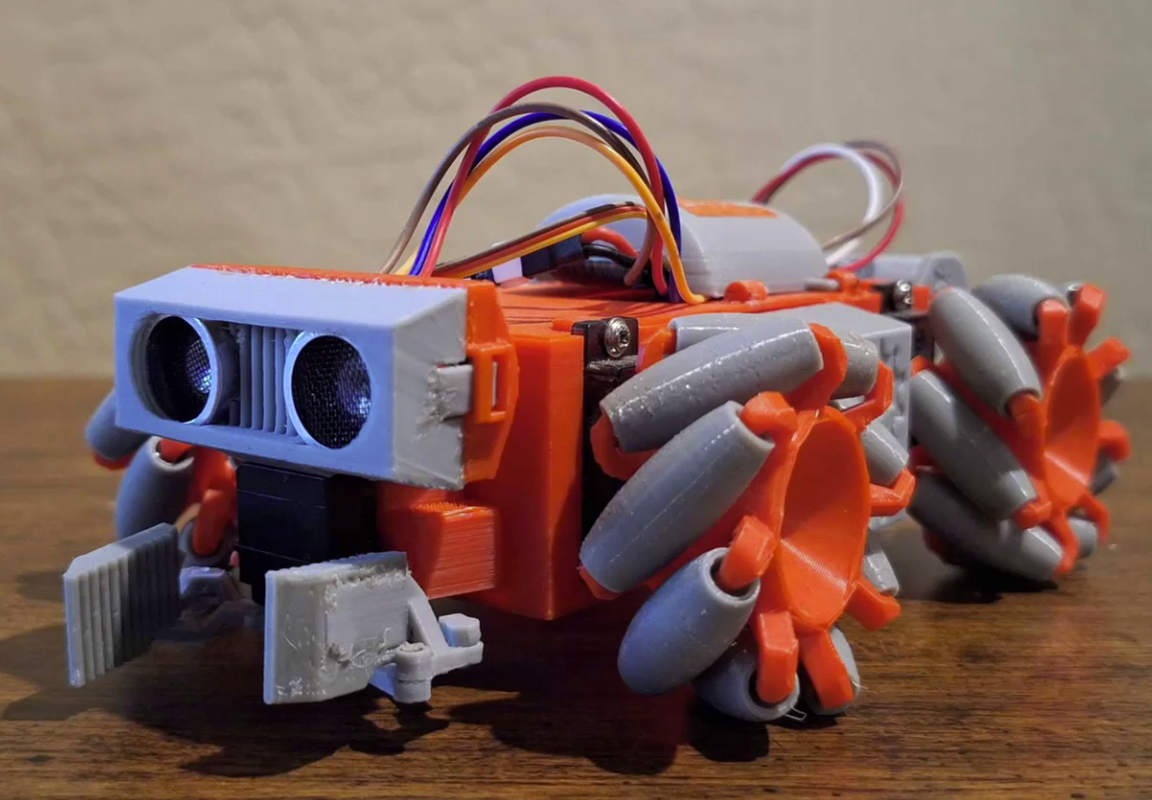
Roverdrive is a hands-on educational platform that teaches programming through a real robot rover.
Using a drag-and-drop coding interface inspired by block-based programming tools, students can build programs by snapping code blocks together. Instead of staring at lines of text, they can focus on learning concepts like sequencing, loops, and problem solving.
When the program runs, the rover follows those instructions in the real world.
Move forward. Turn left. Wait. Repeat.
The code you create isn't just displayed on a screen—it comes to life.
Why We Built It
Roverdrive was created by three brothers: Tristan, Dylan, and Jonathan.
As we explored robotics and programming, we noticed two common problems.
First, many students simply don't have access to computer science education. Not every school offers programming courses, and many robotics platforms are too expensive for students, families, and classrooms.
Second, programming can feel intimidating.
A blank code editor filled with unfamiliar symbols can discourage beginners before they even get started.
We wanted to create something different—a tool that makes coding approachable, visual, and interactive from day one.
Learning to code shouldn't require expensive hardware or years of experience. It should be something anyone can explore.
Learning Through Real-World Results
One of the most exciting parts of Roverdrive is the connection between software and hardware.
Students write programs inside the app and instantly see the results on a physical robot through Bluetooth communication.
Instead of asking, "What does this code do?" students can watch the rover respond immediately.
The platform includes:
- A drag-and-drop coding interface
- A physical programmable rover
- Sandbox mode for experimentation
- Campaign mode with guided challenges
- Support for hardware expansion modules
- Real-time Bluetooth communication
By connecting code to physical movement, abstract programming concepts become much easier to understand.
Built to Be Modular
The rover isn't limited to a single configuration.
Roverdrive is designed around modular hardware that can expand the robot's capabilities. Different modules can add new sensors, accessories, or behaviors, giving students new challenges and opportunities to learn.
As Roverdrive grows, so will the possibilities for what the rover can do.
Built From the Ground Up
Every part of Roverdrive has been designed and developed by our team.
The rover itself is based on an Arduino Nano and features a fully custom 3D-printed chassis. The mobile app is built with React Native and TypeScript, allowing us to create a consistent experience across devices.
From the hardware design to the software architecture, Roverdrive has been a project driven by curiosity, experimentation, and countless hours of iteration.
Looking Ahead
This blog will document our journey as we continue building Roverdrive.
We'll share:
- Development updates
- New features and modules
- Event announcements
- Behind-the-scenes engineering challenges
- Educational resources and tutorials
- Milestones along the way
We're excited to continue improving Roverdrive and making programming more accessible to students everywhere.
This is just the beginning.
Thank you for following along, and welcome to Roverdrive.
— Tristan, Dylan, and Jonathan