Build Log
We Exhibited at Open Sauce 2025
Two days, one rover, and hundreds of makers. Here's what happened when we brought Roverdrive to Open Sauce 2025.
July 2025
We Exhibited at Open Sauce 2025
A few weeks ago, we packed up our rover, loaded a box of stickers, and headed to San Francisco to exhibit Roverdrive at Open Sauce 2025.
It was our first time showing Roverdrive to the public at this scale — two full days on the show floor, talking to curious kids, skeptical parents, fellow makers, and everyone in between. It was exhausting, humbling, and one of the most valuable experiences we've had as a team.
Here's what went down.
The Booth
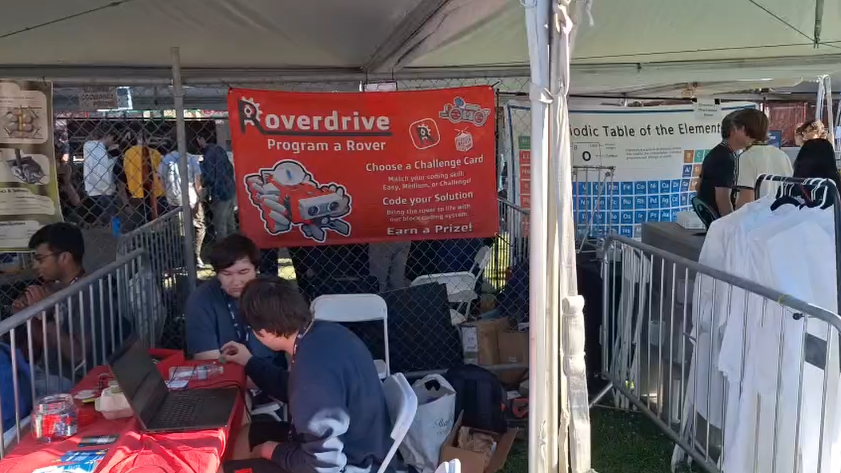
Our setup was simple: a table, the rover, and a single phone running the Roverdrive app. That was really all we needed.
Visitors would take the phone and try the drag-and-drop coding interface themselves. They'd snap blocks together, hit run, and watch the rover react in real time right in front of them. No tutorial. No setup. Just pick it up and go.
That immediate feedback loop — write code, see something move — was the best pitch we could have made. People got it instantly.
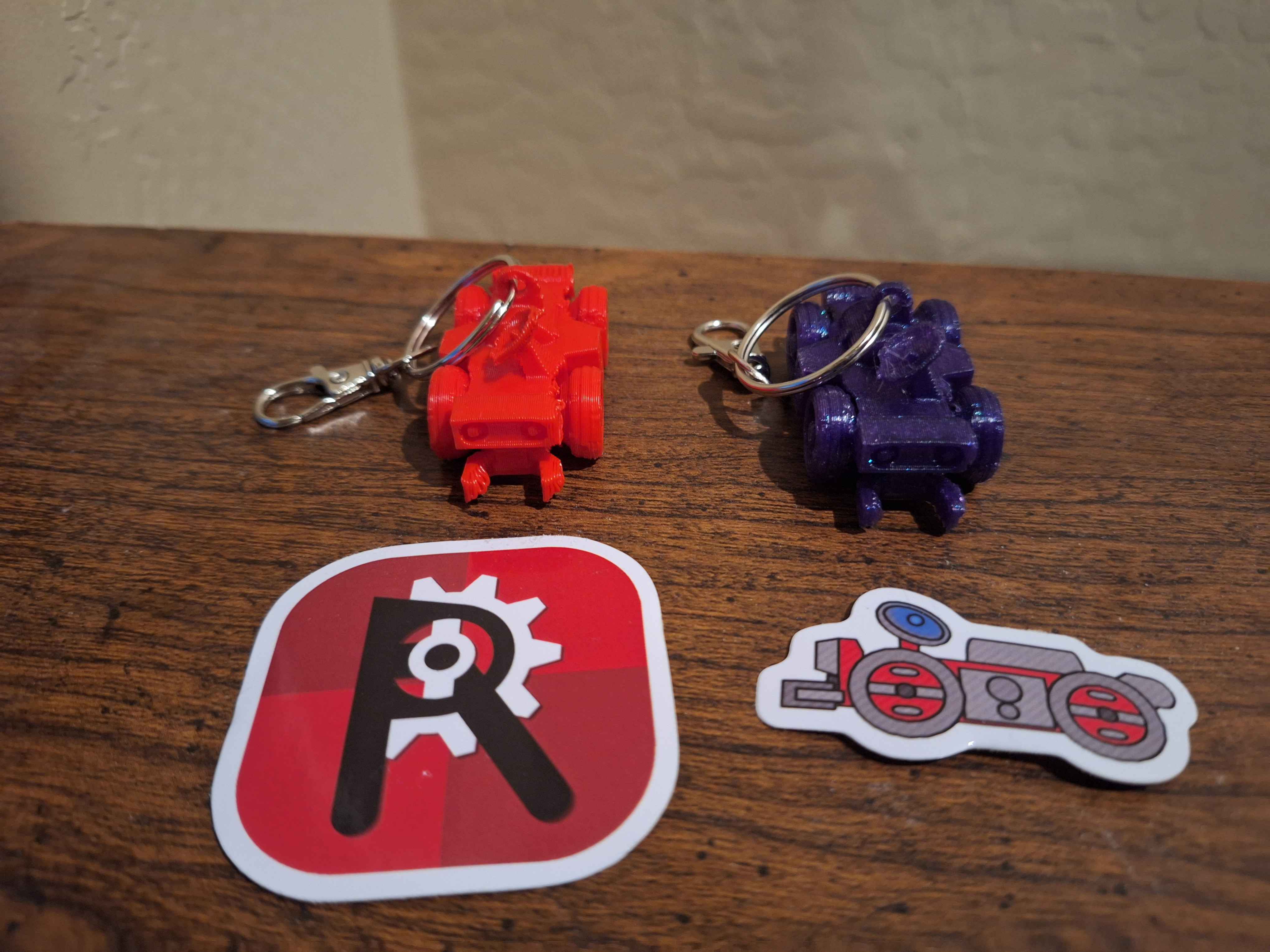
We also handed out custom stickers and 3D-printed rover keychains as prizes, which turned out to be a great conversation starter. Kids especially loved the keychains, and more than a few adults pocketed one too.
Challenge Cards
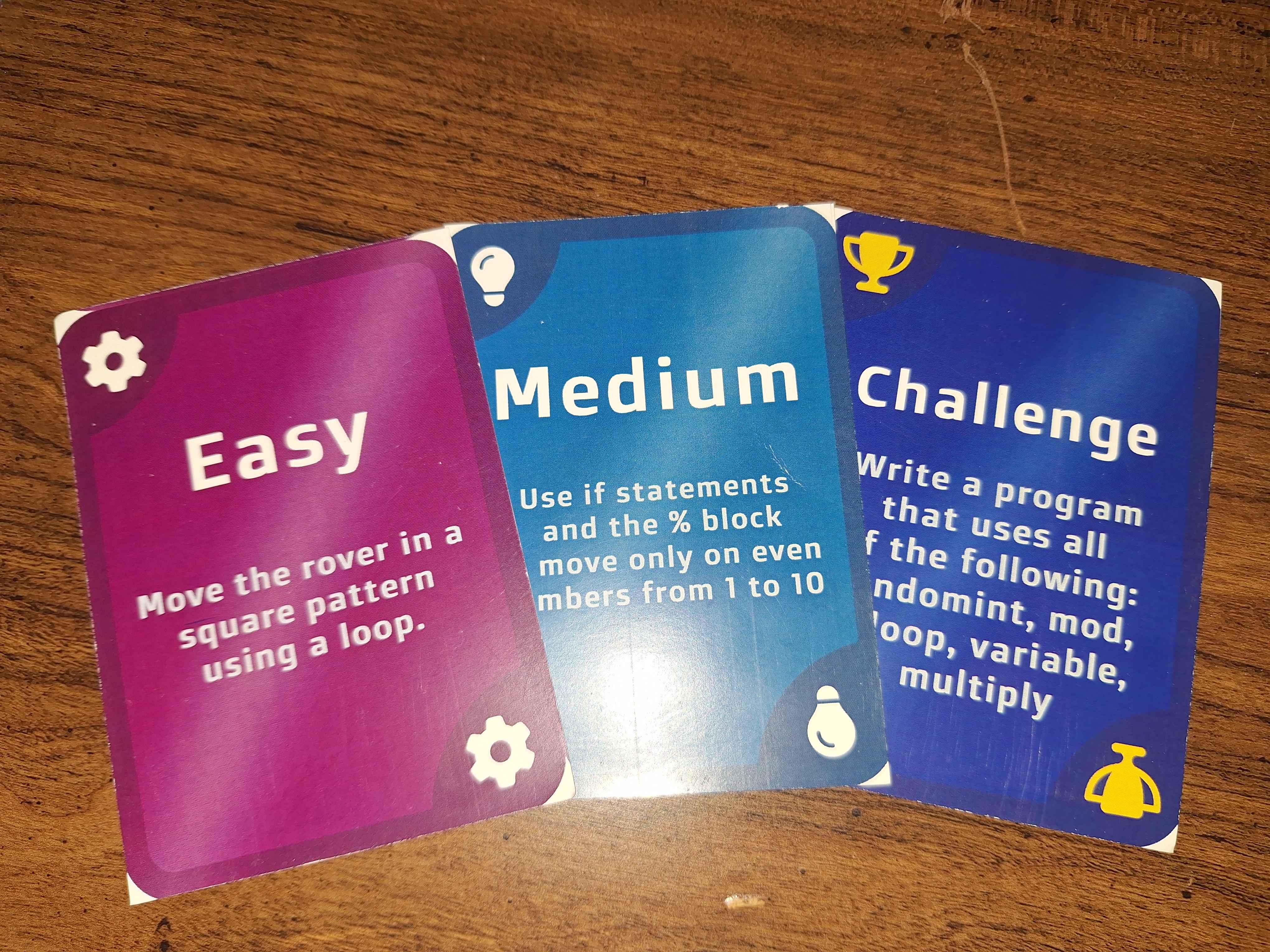
To give people something to actually *do* with the app, we made a set of physical challenge cards for the event.
Each card described a specific task — like navigating a turn, completing a pattern, or hitting a target — and came in different difficulty tiers. Visitors could pick a card, try to code the solution using the drag-and-drop blocks, and see if the rover pulled it off.
It gave the booth energy. Instead of people just poking at the app for a minute and moving on, they'd lock in on a challenge. Some visitors spent 10 or 15 minutes iterating, adjusting their program, watching the rover, and trying again.
Watching someone genuinely try to debug their block program — and then cheer when the rover finally did what they wanted — was exactly the kind of moment we built Roverdrive for.
It Didn't Go Perfectly
We want to be honest about this: Open Sauce was not a smooth two days.
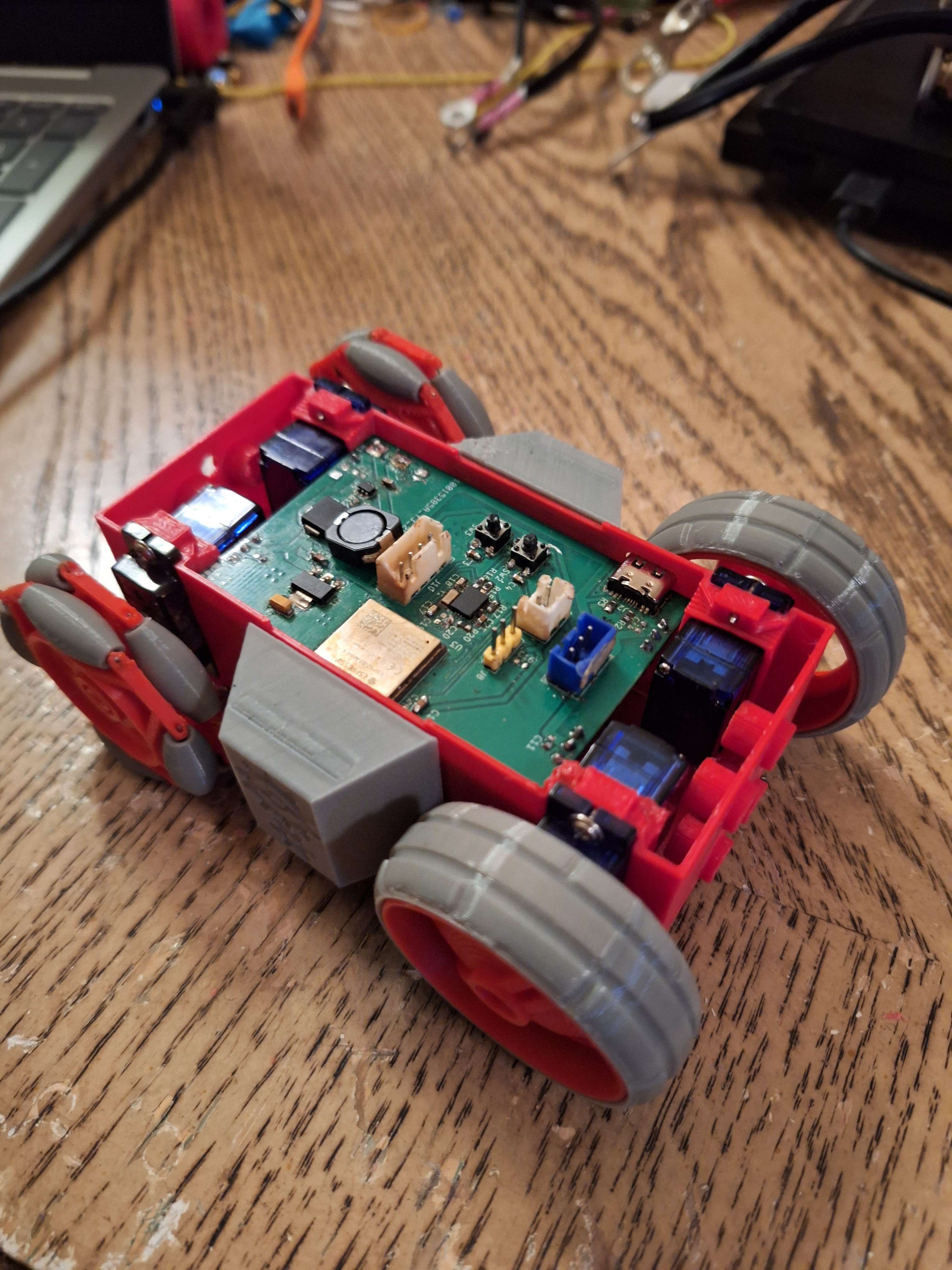
The biggest hit came before the event even started. In the weeks leading up to Open Sauce, we designed a custom PCB for the rover — something Roverdrive hadn't had before. We worked on it right up until the day of the event, assembling and testing as late as we possibly could.
It didn't work in time.
We showed up to Open Sauce with the older hardware instead. After all that work, it was a frustrating way to start the weekend.
Then came the show-floor problems. Bluetooth was unpredictable throughout both days. There were stretches where the connection between the app and the rover just wouldn't hold, and we'd have to pause demos while we reset and tried to get things stable again. Losing momentum mid-demo — especially when someone was excited and ready to try — is about as bad a feeling as it sounds.
On top of that, the block-to-command system that translates a visitor's drag-and-drop program into instructions for the rover had moments where it simply didn't process the code correctly. The rover would do the wrong thing, or nothing at all. We'd have to explain that it wasn't the visitor's fault, troubleshoot on the spot, and try to keep the energy up.
We managed. But those moments were real, and they pointed directly at work we still need to do.
The Maker Community
Open Sauce isn't just a place to show off your work. It's a place to *see* other people's work, and that part was just as valuable as having a booth.
We walked the floor between shifts and met roboticists, hardware hackers, hobbyists, and full-on founders — all building things that genuinely surprised us. Seeing the range of what people are making, and how they talk about it, gave us a lot to think about.
There's something about being in a room full of people who build things that makes you want to build better.
What We Learned
If there's one honest takeaway from Open Sauce, it's this: feedback is uncomfortable and necessary.
We got a lot of it. Some of it confirmed things we already suspected. Some of it caught us off guard. Visitors pointed out gaps in the app experience, asked questions about the rover we didn't have clean answers to, and occasionally said things that were hard to hear.
The technical failures were their own kind of feedback. Bluetooth reliability, the block interpreter, the PCB — these aren't surprises to us anymore. They're the list.
We also realized we had gaps beyond just the product — in how we explain what Roverdrive is, who it's for, and what problem it solves. When you're deep in the build, it's easy to assume those things are obvious. Two days at a public booth made clear they're not.
We left with a longer list of things to work on than we arrived with. That's a good sign.
What's Next
Open Sauce was a checkpoint, not a finish line.
We're taking everything we heard — the praise, the confusion, the questions we couldn't answer — and feeding it back into the product. There's a lot of work ahead on the app, the rover, and how we communicate what Roverdrive actually is.
We'll keep sharing updates here as things develop.
Thanks to everyone who stopped by our booth, tried a challenge card, or just asked us what the rover was. You made the trip worth it.
- Tristan, Dylan, and Jonathan